Punjab’s agricultural sector remains the backbone of Pakistan’s economy, but thousands of young people and small farmers still struggle to access modern farming resources, affordable financing, and stable employment opportunities. Rising fertilizer prices, water shortages, expensive machinery, and limited land utilization have made traditional farming increasingly difficult for low-income families.
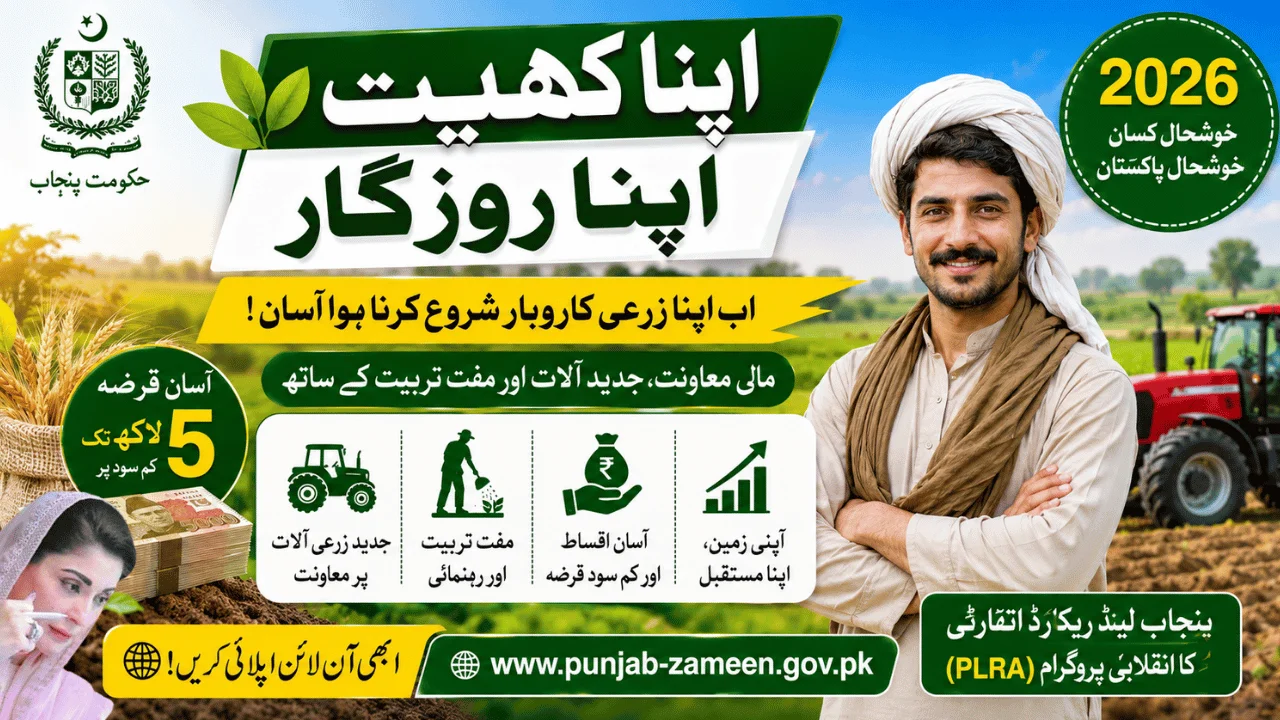
To address these challenges, the Apna Khet Apna Rozgar Program 2026 has become one of the most discussed agricultural support initiatives in Punjab. The program is designed to encourage self-employment, strengthen rural communities, and help unemployed youth enter the agriculture sector with proper financial and technical support.
Many applicants are searching for authentic details regarding the Apna Khet Apna Rozgar Scheme, including eligibility requirements, online registration, loan facilities, training opportunities, and the type of agricultural assistance expected under the program.
This in-depth guide explains everything in a practical and easy-to-understand manner while providing real-world insights for farmers, rural youth, and first-time applicants.
What Is the Apna Khet Apna Rozgar Program 2026?
The Apna Khet Apna Rozgar Program is a Punjab-focused agricultural empowerment initiative aimed at helping individuals build sustainable income through farming and agricultural business activities.
Instead of offering short-term financial relief only, the program focuses on long-term rural development by supporting:
- Small-scale farming projects
- Agricultural startups
- Livestock-related businesses
- Modern farming techniques
- Youth self-employment opportunities
The broader objective is not just employment generation, but also improving agricultural productivity across Punjab.
Why Agriculture Support Programs Are Important in Punjab
Agriculture supports millions of families in Pakistan, yet many farmers still use outdated techniques due to lack of investment and training.
Major Challenges Faced by Farmers
| Agricultural Problem | Impact on Farmers |
|---|---|
| Expensive machinery | Reduced productivity |
| High fuel prices | Increased operational cost |
| Water shortages | Crop losses |
| Limited financing | Slow business growth |
| Lack of training | Poor farming efficiency |
Programs like Apna Khet Apna Rozgar 2026 can help bridge the gap between traditional farming and modern agricultural practices.
Main Objectives of the Program
The scheme is expected to focus on multiple long-term development goals rather than simple loan distribution.
Key Goals Include
- Promoting agricultural entrepreneurship
- Supporting unemployed rural youth
- Encouraging smart farming methods
- Increasing crop productivity
- Reducing rural unemployment
- Improving food production capacity
Agricultural experts believe that empowering small farmers can strengthen both local economies and national food security.
Expected Benefits of Apna Khet Apna Rozgar Scheme
The program may offer several types of assistance depending on the applicant’s farming plan and eligibility category.
1. Agricultural Loan Support
One of the biggest barriers in farming is lack of affordable capital. Many small farmers cannot purchase quality seeds, irrigation equipment, or machinery because commercial bank loans are expensive.
Possible Financial Support Areas
- Crop farming
- Tunnel farming
- Dairy farming
- Poultry businesses
- Livestock development
- Drip irrigation systems
Flexible repayment models may also help new farmers manage financial pressure during initial production stages.
2. Access to Modern Farming Equipment
Traditional farming methods often reduce crop quality and productivity. Modern agricultural tools can significantly improve farming efficiency.
Equipment That May Be Supported
- Tractors
- Seed drills
- Solar water pumps
- Irrigation systems
- Fertilizer spreaders
- Harvesting tools
Technology-based farming can help farmers save time, reduce costs, and improve overall crop yield.
3. Professional Agriculture Training
Many rural youth are interested in farming but lack practical agricultural knowledge.
Training Areas May Include
- Smart farming techniques
- Soil management
- Water conservation
- Pest control methods
- Livestock care
- Organic farming practices
Proper training can help applicants turn farming into a profitable long-term business instead of seasonal labor.
4. Self-Employment Opportunities
The program aims to encourage people to build independent agricultural businesses rather than depend only on temporary jobs.
Potential Income Opportunities
| Sector | Possible Business Type |
|---|---|
| Livestock | Dairy & meat production |
| Poultry | Small poultry farms |
| Crops | Vegetable & wheat farming |
| Fruits | Orchard management |
| Fisheries | Fish farming projects |
This approach supports long-term economic stability for rural households.
Who Can Apply for the Program?
Eligibility conditions may vary slightly depending on government policy updates, but applicants are generally expected to meet basic requirements.
Expected Eligibility Criteria
Applicants may qualify if they:
- Are residents of Punjab
- Possess a valid CNIC
- Belong to low or middle-income households
- Have interest in agriculture or livestock
- Fall within the approved age limit
- Are unemployed or seeking self-employment
Priority may be given to individuals with practical farming plans and rural backgrounds.
Documents Required for Application
Applicants should prepare all documents before registration begins to avoid delays during verification.
Commonly Required Documents
Personal Documents
- CNIC copy
- Domicile certificate
- Passport-size photograph
Financial Information
- Income proof (if available)
- Bank account details
Agriculture-Related Information
- Farming proposal or business plan
- Land ownership or lease details (if applicable)
Having accurate documentation improves approval chances.
How to Apply Online for Apna Khet Apna Rozgar 2026
Digital registration systems are expected to make the application process faster and more transparent.
Step 1 – Visit the Official Portal
Applicants should use only official Punjab government websites and avoid fake registration links shared on social media.
Step 2 – Create an Applicant Account
Basic details may include:
- CNIC number
- Mobile number
- Residential information
- Email address (if required)
Step 3 – Submit Agricultural Plan
Applicants may need to explain:
- Type of farming activity
- Required financial support
- Equipment needs
- Expected business outcomes
Well-prepared applications often receive better consideration.
Step 4 – Upload Documents
All supporting documents should be clear and valid.
Step 5 – Final Verification Process
Authorities may verify:
- Identity records
- Income details
- Land information
- Farming proposal authenticity
Selected applicants could receive updates through SMS or official notifications.
Practical Tips to Increase Selection Chances
Many applicants submit incomplete or weak applications. Experts recommend preparing properly before registration.
Helpful Application Tips
- Prepare a realistic farming plan
- Clearly explain income goals
- Use valid and updated documents
- Keep your mobile number active
- Avoid false information
Applicants showing genuine interest and preparation may have stronger chances during evaluation.
Common Mistakes Applicants Should Avoid
Submitting Incomplete Documents
Missing paperwork can delay approval.
Providing Unrealistic Business Plans
Authorities may reject impractical proposals.
Using Incorrect CNIC Information
Even small typing mistakes can create verification problems.
Applying Through Fake Websites
Only trust official Punjab government portals.
How This Program Can Transform Rural Communities
Agriculture programs are not only about financial aid. When implemented properly, they can improve entire rural economies.
Possible Long-Term Impact
- Reduced unemployment
- Increased food production
- Better rural income opportunities
- Modernization of farming systems
- Improved agricultural exports
Programs supporting youth in agriculture can also reduce migration toward overcrowded urban areas.
Latest Expectations for 2026 Agriculture Initiatives
Agricultural experts believe future support programs in Punjab may increasingly focus on:
- Climate-smart farming
- Solar-powered irrigation
- Water-saving technologies
- Digital crop monitoring
- Smart agriculture training systems
These improvements could help farmers manage rising environmental and economic challenges more effectively.
Frequently Asked Questions (FAQs)
Can unemployed youth apply for this program?
Yes, the program is mainly designed to support unemployed or low-income individuals interested in agriculture.
Is land ownership compulsory for application?
Some categories may allow leased land or partnership farming arrangements depending on policy rules.
Will training be provided to selected applicants?
Training support is expected to be part of the program for improving farming skills and productivity.
Can women apply for agricultural support?
Women involved in farming or livestock activities may also qualify if they meet eligibility conditions.
How will applicants receive financial assistance?
Approved assistance may be transferred through banks or official financial channels.
Can livestock businesses be included in the scheme?
Yes, livestock and dairy farming may fall under eligible agricultural business categories.
Conclusion
The Apna Khet Apna Rozgar Program 2026 represents an important opportunity for Punjab’s youth, small farmers, and rural families seeking long-term financial stability through agriculture. Instead of temporary relief, the initiative focuses on sustainable farming, self-employment, and modernization of agricultural practices.
With proper financial support, training opportunities, and access to modern equipment, individuals can build profitable agricultural businesses while contributing to Pakistan’s food security and rural development.
Applicants interested in the program should prepare their documents, update their records, and develop practical farming plans in advance to improve their chances of successful registration and approval.